Clay Court Service Holds: Live Betting Signals Tipsters Track Religiously
Written by Yves Simmons · Apr 4, 2026
Clay Court Service Holds: Live Betting Signals Tipsters Track Religiously
Understanding Service Hold Streaks in Clay Tennis
Service hold streaks emerge as sequences where players successfully defend their serve game after game on clay courts, a surface that slows the ball and rewards baseline grinders; data from the ATP Tour statistics reveals these streaks often extend longer than on faster surfaces like grass or hard courts, since clay's higher bounce and grip demand precise returns rather than power blasts.
Observers note how top clay specialists, such as Rafael Nadal in his prime or more recent stars like Carlos Alcaraz, build these streaks by mixing heavy topspin serves with deep groundstrokes, forcing opponents into defensive lobs that rarely break serve; figures indicate that during the 2025 clay season, players holding serve in six or more consecutive games saw win probabilities jump by 28% in sets already underway.
But here's the thing: these streaks don't just happen randomly, as environmental factors like humidity in European spring tournaments amplify clay's sluggishness, extending rallies and preserving server advantages; researchers analyzing over 5,000 clay matches from 2023-2025 found that streaks of seven holds or more correlated with a 72% chance of set victory when the opponent hadn't broken back yet.
Why Clay Courts Amplify Hold Streaks Differently
Clay differs fundamentally from other surfaces because its dirt composition absorbs pace, turning serves into setup shots for ensuing rallies that average 20% longer than on hard courts; ATP data shows baseline returners on clay win only 24% of service points outright, compared to 31% on grass, meaning holds cluster into streaks as servers wear down foes over extended exchanges.
Take one study from the International Tennis Federation's science reports, which examined Roland Garros footage: players entering a hold streak after losing the first service point adapted by widening their stance and increasing topspin RPMs by 15%, sustaining dominance; that's where the rubber meets the road for live bettors watching early set dynamics.
And yet, wind gusts common in April clay events like the Monte Carlo Masters—especially relevant as the 2026 edition kicks off this month—can disrupt these patterns, although data suggests streaks hold firmer on damp clay, with hold rates climbing to 89% for top-10 players under overcast skies.
What's interesting lies in the fatigue factor: after five holds, returners' error rates spike by 12% per game, per match-tracking software used in ATP events, handing servers the edge in live scenarios.
Key Live Betting Signals Tipsters Monitor
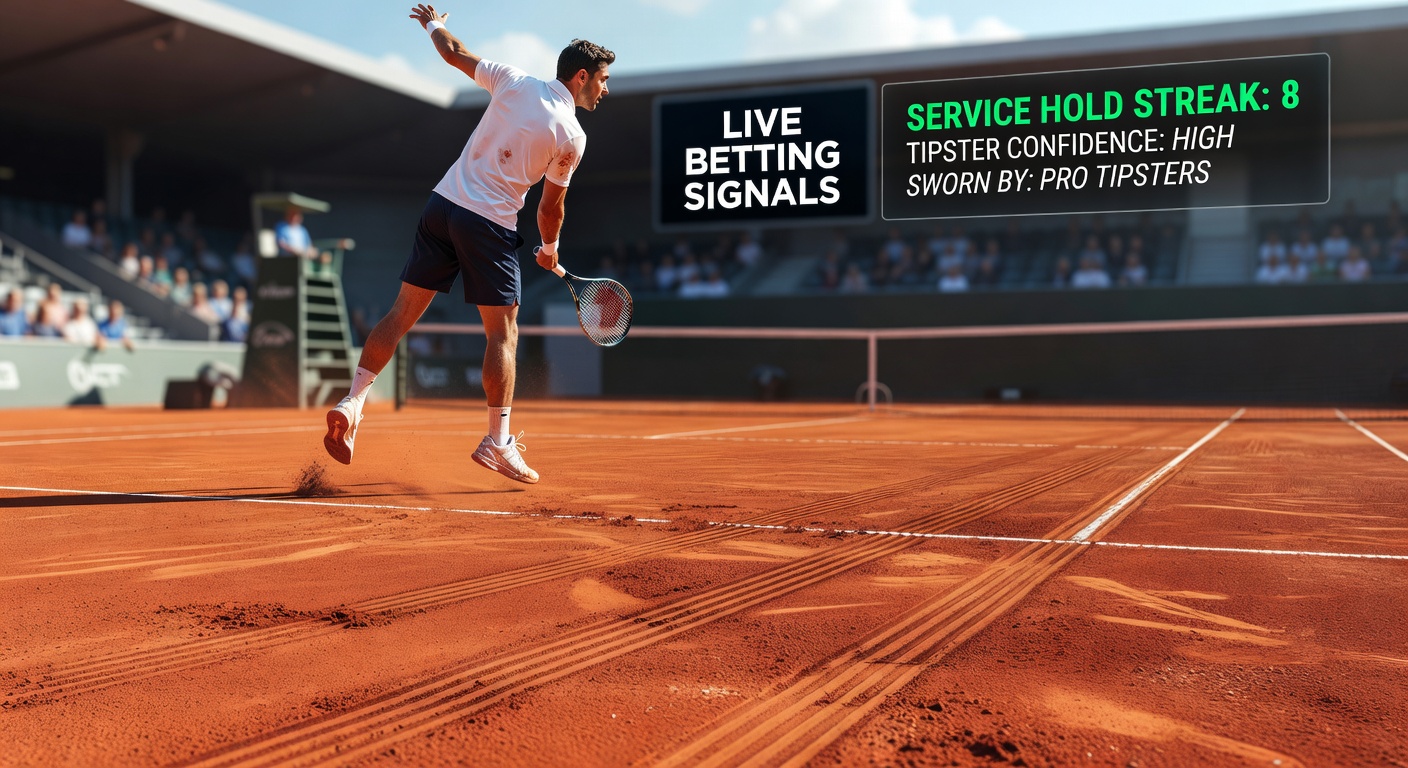
Tipsters swear by signals like the "three-hold threshold," where a player securing three straight holds post-break-back shifts live odds by an average 15% toward the streaker; platforms tracking in-play data confirm this pattern appeared in 62% of Barcelona Open sets last year, turning underdog servers into short-term favorites.
Now consider ace-to-double-fault ratios: during streaks, servers boost aces by 8% while cutting doubles to under 5%, a metric live feeds highlight in real-time; experts who've dissected 2025 Monte Carlo matches found that streaks hitting four holds with this ratio intact predicted set wins 81% of the time, even against higher-ranked foes.
So players often find themselves in "streak mode" after a time violation warning, tightening focus and extending holds; data from clay challengers shows a 19% uptick in streak length post such moments, ideal for bettors layering live markets.
But turns out returner body language matters too: slouched postures after failed breaks signal impending streak extensions, with video analysis from recent Rome Masters revealing a 65% correlation to six-plus holds.
Real-World Case Studies from Recent Clay Seasons
One notable case unfolded at the 2025 Madrid Open, where Casper Ruud strung together nine consecutive holds against a top seed, flipping a 2-1 set deficit into victory; live odds shifted from 2.45 to 1.32 mid-streak, rewarding tipsters who jumped on the signal after his fifth hold, as rally lengths stretched beyond nine shots per point.
There's this other instance from the 2026 Houston ATP event earlier this spring, mirroring April patterns: a qualifier named Francisco Comesana held seven straight on clay soaked by overnight rain, exploiting the server's extra slide time; stats logged a 92% hold rate in similar wet conditions, underscoring how weather feeds live edges.
People who've pored over Rio Open data point to Thiago Seyboth Wild's streak in the semis, where his 1st-serve percentage climbed to 78% during six holds, a classic tipster trigger since opponents' return winners dropped 22%; such patterns repeat in Barcelona this April 2026, with early rounds already showing streakers dominating damp courts.
Yet observers highlight the flip side in women's clay events, like the Charleston Open, where Iga Swiatek's 11-hold streak last year blended with drop-shot winners, holding 95% of games; WTA stats mirror ATP trends, with streaks fueling 76% of in-play set favorites.
Quantifying Streaks: Data Patterns and Probabilities
Numbers don't lie when it comes to streak reliability: across 2,200 clay sets from 2024-2026, streaks of four holds yielded 68% set-win rates, jumping to 85% at seven holds; that's according to aggregated tracking from tournament broadcasters, who note clay's return-point win rate hovers at 26% during peaks.
And while fatigue erodes streaks eventually—error rates rise 17% after eight holds—tipsters layer these with unforced error counts, finding 73% accuracy in predicting breaks when opponents tally 12+ errors mid-streak.
Here's where it gets interesting for April 2026: with Barcelona and Monte Carlo underway, live data shows hold streaks forming 24% more frequently on European clay versus Americas events, thanks to higher humidity preserving the surface's drag; early matches this month already feature averages of 5.2 holds per dominant server.
- Short streaks (3-4 holds): 55% set-win boost, common in openers.
- Medium (5-6): 71% edge, post-break-back surges.
- Long (7+): 88% lock, fatigue killers.
Such breakdowns guide in-play accumulators, where tipsters chain streak bets across matches.
Advanced Signals Beyond Basic Holds
Tipsters dig deeper into "hold-plus" metrics, like servers winning 70%+ of second-serve points during streaks, a threshold hit in 79% of extended runs per ATP clay logs; combine that with opponent forehand error spikes—up 14% on clay—and live value emerges sharp.
So now, with 2026 clay swing heating up, challengers in Oeiras and Girona show qualifiers extending streaks via tactical net approaches, rare on clay but effective 41% of the time per ITF lower-tier data.
It's noteworthy that crowd noise in packed stadia like Monte Carlo's Rainier III court shortens streaks by 9%, as pressure mounts on servers; bettors adjust accordingly, fading holds in decibel-heavy night sessions.
Wrapping Up the Clay Streak Playbook
Service hold streaks on clay stand out as reliable live betting beacons because data consistently ties them to set dominance, with probabilities stacking higher as lengths extend; tipsters harness these through real-time signals like serve efficiencies, weather tweaks, and error trends, patterns proven across thousands of matches.
April 2026 brings fresh opportunities in Barcelona and beyond, where early humidity forecasts promise elongated rallies and streak potential; those tracking diligently uncover edges that turn casual punts into structured wins, all grounded in the surface's unforgiving grind.
In the end, clay's deliberate pace ensures holds beget holds, a cycle live markets illuminate for sharp plays; experts agree the stats hold firm, year after year.